
For pregnancy to happen, several conditions must be met. First, the man needs healthy testes producing sperm and open ducts that carry the sperm to mix with fluid from the prostate and seminal vesicles to form semen, which is then ejaculated. Second, the woman needs a healthy ovary that releases a healthy egg, an open fallopian tube to pick up the egg, and a healthy uterus ready to receive the fertilized egg. Third, the man must be able to ejaculate inside the vagina, and finally, intercourse must take place during the fertile window around ovulation.
Struggling to conceive? If natural conception is difficult in your case, IVF and ICSI with Dr. Ashraf Sabry may be the right solution. Learn about the steps, timing and who it suits.
Pregnancy begins when a sperm from the man unites with a mature egg from the woman to form an embryo.
The journey of the sperm
With sexual arousal, blood flows into the two erectile cylinders of the penis, causing an erection. At orgasm, semen is ejaculated into the upper vagina. Semen clots immediately after ejaculation, then starts to liquefy within minutes and becomes fully liquid after about 20–60 minutes. Sperm then begin to swim through the cervical opening into the uterus.
A large number of sperm is needed in each ejaculate, because only a small fraction gets into the cervix: many die in the acidic vagina and others flow out. More die in the cervix and uterus, so only a few thousand reach the fallopian tubes, and only a few hundred get near the waiting egg.
Fertilization
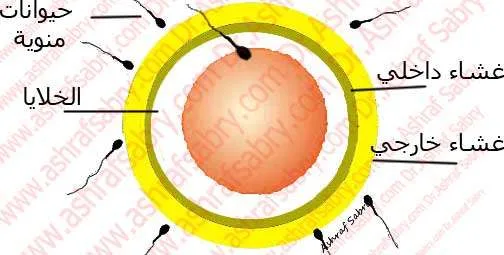
The sperm releases enzymes from its head to pass through the corona cells surrounding the egg, then through the egg’s outer shell (zona pellucida), and finally fuses with the egg membrane (oolemma). As soon as the first sperm fuses, the egg changes its outer layers to block any other sperm from entering.
The genetic material (chromosomes) of the sperm and of the egg then forms two separate nuclei called pronuclei, one from each parent, which come together as the first cell of the embryo.
How the baby’s sex is determined
The baby’s sex is fixed at the moment of fertilization, and it is determined by the sperm. Each egg carries 23 chromosomes, including one X chromosome. Each sperm also carries 23 chromosomes, including either an X or a Y. If an X-bearing sperm fertilizes the egg, the embryo is XX (a girl); if a Y-bearing sperm does, it is XY (a boy).
Early development and implantation
The fertilized egg divides into 2 cells, then 4, then about 8 cells by day 3, and becomes a solid ball of cells called a morula by day 4. Fluid then collects inside to form a cavity, and by day 5 the embryo is called a blastocyst. Throughout these stages the outer shell (zona pellucida) remains intact.
Meanwhile, the embryo travels along the fallopian tube towards the uterus, moved by the beating cilia and by contractions of the tube’s muscular wall, and nourished by fluids secreted by the tube lining. The blastocyst reaches the uterus around day 5, where it breaks out of its shell in a process called hatching, so that it can embed in the uterine lining. Implantation begins around day 6 and is complete by about day 10.
The implanting embryo produces the hormone hCG, which keeps the corpus luteum in the ovary alive so that it continues to produce progesterone. Progesterone maintains the uterine lining and supports the pregnancy until the placenta takes over this role. hCG is also the hormone detected by pregnancy tests.


International Guidelines
In line with global standards, Dr. Sabry follows the latest recommendations from the American Society for Reproductive Medicine (ASRM), European Society of Human Reproduction and Embryology (ESHRE), and Royal College of Obstetricians and Gynaecologists (RCOG). Thus, patients receive care that is safe, ethical, and evidence-based.
Our Patient Reviews
Discover what patients say about us on Google Maps, Vezeeta, and WhatClinic.
Why Choose Dr. Ashraf Sabry?
Dr. Ashraf Sabry, consultant in obstetrics, gynecology, fertility, and aesthetic gynecology, is recognized among the best OBGYN and fertility specialists in Cairo. With over 20 years of experience, he combines science and compassion to provide world-class care. Book your appointment through the contact page, WhatsApp, or call +201022224442.