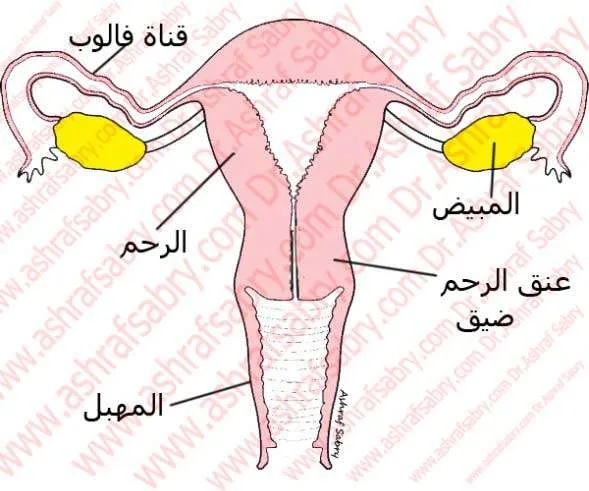
The cervix is the gateway at the lower end of the uterus through which sperm travel into the uterus and towards the egg. The cervical canal has folds lined with cells that produce mucus. The amount and texture of this mucus change with female hormone levels through the cycle. Around ovulation it helps healthy sperm enter the cervix; after ovulation it becomes scanty and thick, blocking sperm from entering the uterus. Inside the cervical canal, the mucus protects sperm from the acidity of the vagina and nourishes them. Problems with the cervix can prevent sperm from reaching the egg and delay pregnancy.
Struggling to conceive? If natural conception is difficult in your case, IVF and ICSI with Dr. Ashraf Sabry may be the right solution. Learn about the steps, timing and who it suits.
Cervical stenosis (narrowing)
Narrowing of the cervix, usually after extensive cervical cautery, laser treatment or cone biopsy, can block sperm from entering.
Cervical mucus problems
Sometimes the cervical mucus is too scanty to support sperm, or so thick that sperm cannot pass through it.
Antisperm antibodies in the cervix
It was once believed that antibodies in the cervical mucus commonly killed sperm. Current evidence shows that testing for this does not change management, and it is no longer routinely recommended.

Treatment of cervical problems
Infections
Cervical infections are treated with the appropriate medication once the organism is identified. Chlamydia testing is particularly important, as it can also damage the fallopian tubes.
Mucus and antibody problems
Steroids were used in the past for cervical antibodies but were abandoned because of their side effects, and estrogen for poor mucus has not proven useful. Today, intrauterine insemination (IUI), which places prepared sperm directly into the uterus beyond the cervix, or IVF, effectively bypasses all cervical factors.
Cervical stenosis
The cervix can be gently dilated, or bypassed using an insemination or transfer catheter. Avoiding unnecessary cervical cautery prevents narrowing in the first place.

International Guidelines
In line with global standards, Dr. Sabry follows the latest recommendations from the American Society for Reproductive Medicine (ASRM), European Society of Human Reproduction and Embryology (ESHRE), and Royal College of Obstetricians and Gynaecologists (RCOG). Thus, patients receive care that is safe, ethical, and evidence-based.
Our Patient Reviews
Discover what patients say about us on Google Maps, Vezeeta, and WhatClinic.
Why Choose Dr. Ashraf Sabry?
Dr. Ashraf Sabry, consultant in obstetrics, gynecology, fertility, and aesthetic gynecology, is recognized among the best OBGYN and fertility specialists in Cairo. With over 20 years of experience, he combines science and compassion to provide world-class care. Book your appointment through the contact page, WhatsApp, or call +201022224442.