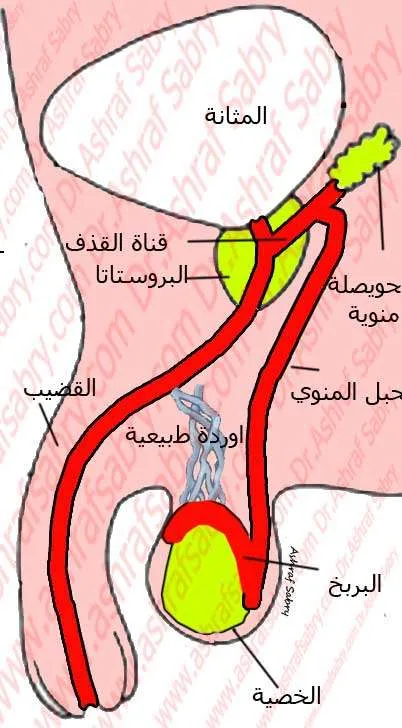
The testes produce sperm, which pass into the epididymis and then the vas deferens, mix with fluid from the seminal vesicles and prostate, and are ejaculated through the penis into the upper vagina. Male factors contribute to about 40–50% of infertility in couples, either through problems with sperm production, problems delivering sperm, or other causes.
According to the World Health Organization (2021), the lower reference limits for a fertile man are a semen volume of 1.4 mL, a sperm concentration of 16 million per mL, total motility of 42% (progressive 30%) and at least 4% normal forms. Most men have many abnormally shaped sperm; this is normal.
Problems with the hormones that control the testes
Sperm and testosterone production are controlled by glands in the brain. The hypothalamus releases GnRH, which stimulates the pituitary to release FSH and LH. LH drives the Leydig cells to produce testosterone, and testosterone together with FSH drives the seminiferous tubules to produce mature sperm. Problems with these glands lead to low or absent sperm production (hypogonadotropic hypogonadism).
Congenital causes
For example, Kallmann syndrome, in which GnRH is not produced, often with a reduced sense of smell.
Acquired damage
Damage to the hypothalamus or pituitary from injury, surgery, radiation, tumours or certain medications. The most common acquired cause today is the use of testosterone or anabolic steroids, which switch off FSH and LH.
Problems in the testes themselves
The testes sit in the scrotum, outside the body, because they need a lower temperature to produce sperm efficiently. Conditions affecting the testes can reduce sperm production:
- Unknown (idiopathic) causes, which account for a large share of cases.
- Genetic causes, such as Klinefelter syndrome (47,XXY) and Y-chromosome microdeletions, which are tested for when the sperm count is very low.
- Radiation, accidental or therapeutic, which can shrink the testes; the damage depends on the dose and duration.
- Chemicals and drugs, such as chemotherapy, petroleum products, toxic fumes and lead; the damage depends on the dose and duration of exposure.
- Heat, for example in men who work near furnaces or in the iron and steel industry.
- Direct injury to the testes.
- Varicocele, a swelling of the veins around the testis that raises its temperature and harms sperm count, motility and shape.
- Testicular torsion, in which the testis twists on its cord, cutting off its blood supply; it is a surgical emergency, and delay can lead to loss of the testis.
- Undescended testes and testicular tumours, which can damage sperm-producing tissue.


Surgical treatment
Undescended testes
An undescended testis should be brought down into the scrotum in early childhood (ideally by 12–18 months). If this is not possible, it may be removed to avoid the risk of cancer.
Testicular torsion
Torsion is treated by emergency surgery to untwist and fix the testis.
Varicocele repair
Older open operations tied the dilated veins in the groin, with recurrence rates of around 20% and a risk of fluid collecting around the testis (hydrocele) if lymphatic vessels were tied. Today, microsurgical varicocelectomy ties all the dilated veins, even small ones, while preserving the testicular artery and lymphatics. It has the lowest recurrence and complication rates, and the patient goes home the same day. Current guidelines recommend repair for a varicocele that can be felt on examination in a man with abnormal semen parameters whose partner is trying to conceive.

Medical treatment
- Hormone deficiency (hypogonadotropic hypogonadism): treatment with hCG and FSH injections is highly effective and can restore sperm production in most men.
- Testosterone: testosterone should not be given to men trying to conceive. It suppresses FSH and LH and can stop sperm production. Men with low testosterone who want children are treated instead with medications that stimulate their own production.
- Clomiphene, tamoxifen and FSH are sometimes used off-label for men with unexplained low sperm counts; the evidence is limited, and treatment should be supervised by a specialist.
- Antioxidants such as vitamins C and E, zinc, L-carnitine and coenzyme Q10, and drugs such as pentoxifylline, may improve some semen parameters, but there is little evidence that they increase live births.
- Thick (hyperviscous) semen: sperm can be separated from the seminal fluid in the laboratory for IUI or IVF.
- Antisperm antibodies: steroids are no longer used because of their side effects; ICSI is the effective treatment.
- Varicocele: tablets for the veins do not improve fertility; clinically significant varicoceles are treated surgically.
When sperm problems are severe or do not respond to treatment, ICSI allows pregnancy with very few sperm, including sperm retrieved directly from the testis.

International Guidelines
In line with global standards, Dr. Sabry follows the latest recommendations from the American Society for Reproductive Medicine (ASRM), European Society of Human Reproduction and Embryology (ESHRE), and Royal College of Obstetricians and Gynaecologists (RCOG). Thus, patients receive care that is safe, ethical, and evidence-based.
Our Patient Reviews
Discover what patients say about us on Google Maps, Vezeeta, and WhatClinic.
Why Choose Dr. Ashraf Sabry?
Dr. Ashraf Sabry, consultant in obstetrics, gynecology, fertility, and aesthetic gynecology, is recognized among the best OBGYN and fertility specialists in Cairo. With over 20 years of experience, he combines science and compassion to provide world-class care. Book your appointment through the contact page, WhatsApp, or call +201022224442.