Category: How Pregnancy Happens

  • How Does Pregnancy Happen?

    How Does Pregnancy Happen?

    For pregnancy to happen, several conditions must be met. First, the man needs healthy testes producing sperm and open ducts that carry the sperm to mix with fluid from the prostate and seminal vesicles to form semen, which is then ejaculated. Second, the woman needs a healthy ovary that releases a healthy egg, an open fallopian tube to pick up the egg, and a healthy uterus ready to receive the fertilized egg. Third, the man must be able to ejaculate inside the vagina, and finally, intercourse must take place during the fertile window around ovulation.

    Struggling to conceive? If natural conception is difficult in your case, IVF and ICSI with Dr. Ashraf Sabry may be the right solution. Learn about the steps, timing and who it suits.

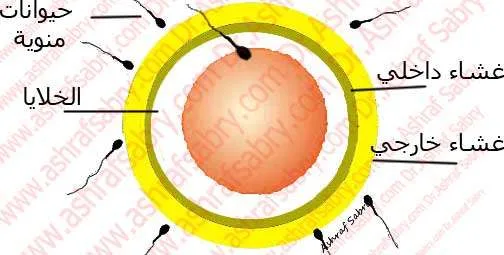
    Pregnancy begins when a sperm from the man unites with a mature egg from the woman to form an embryo.

    The journey of the sperm

    With sexual arousal, blood flows into the two erectile cylinders of the penis, causing an erection. At orgasm, semen is ejaculated into the upper vagina. Semen clots immediately after ejaculation, then starts to liquefy within minutes and becomes fully liquid after about 20–60 minutes. Sperm then begin to swim through the cervical opening into the uterus.

    A large number of sperm is needed in each ejaculate, because only a small fraction gets into the cervix: many die in the acidic vagina and others flow out. More die in the cervix and uterus, so only a few thousand reach the fallopian tubes, and only a few hundred get near the waiting egg.

    Fertilization

    The sperm releases enzymes from its head to pass through the corona cells surrounding the egg, then through the egg’s outer shell (zona pellucida), and finally fuses with the egg membrane (oolemma). As soon as the first sperm fuses, the egg changes its outer layers to block any other sperm from entering.

    The genetic material (chromosomes) of the sperm and of the egg then forms two separate nuclei called pronuclei, one from each parent, which come together as the first cell of the embryo.

    How the baby’s sex is determined

    The baby’s sex is fixed at the moment of fertilization, and it is determined by the sperm. Each egg carries 23 chromosomes, including one X chromosome. Each sperm also carries 23 chromosomes, including either an X or a Y. If an X-bearing sperm fertilizes the egg, the embryo is XX (a girl); if a Y-bearing sperm does, it is XY (a boy).

    Early development and implantation

    The fertilized egg divides into 2 cells, then 4, then about 8 cells by day 3, and becomes a solid ball of cells called a morula by day 4. Fluid then collects inside to form a cavity, and by day 5 the embryo is called a blastocyst. Throughout these stages the outer shell (zona pellucida) remains intact.

    Meanwhile, the embryo travels along the fallopian tube towards the uterus, moved by the beating cilia and by contractions of the tube’s muscular wall, and nourished by fluids secreted by the tube lining. The blastocyst reaches the uterus around day 5, where it breaks out of its shell in a process called hatching, so that it can embed in the uterine lining. Implantation begins around day 6 and is complete by about day 10.

    The implanting embryo produces the hormone hCG, which keeps the corpus luteum in the ovary alive so that it continues to produce progesterone. Progesterone maintains the uterine lining and supports the pregnancy until the placenta takes over this role. hCG is also the hormone detected by pregnancy tests.

    Sperm penetrating the egg
    Sperm penetrating the egg
    Fertilized egg with two pronuclei
    The two pronuclei
    Four-cell embryo
    Four-cell embryo
    Eight-cell embryo
    Eight-cell embryo
    Morula
    Morula
    Blastocyst
    Blastocyst
    Embryo hatching from its outer shell
    Embryo hatching from the zona pellucida
    Female chromosomes (XX)
    Female (XX)
    Male chromosomes (XY)
    Male (XY)
    Embryo implantation in the uterus
    Implantation of the embryo in the uterus

    International Guidelines

    In line with global standards, Dr. Sabry follows the latest recommendations from the American Society for Reproductive Medicine (ASRM), European Society of Human Reproduction and Embryology (ESHRE), and Royal College of Obstetricians and Gynaecologists (RCOG). Thus, patients receive care that is safe, ethical, and evidence-based.

    Our Patient Reviews

    Discover what patients say about us on Google Maps, Vezeeta, and WhatClinic.

    Why Choose Dr. Ashraf Sabry?

    Dr. Ashraf Sabry, consultant in obstetrics, gynecology, fertility, and aesthetic gynecology, is recognized among the best OBGYN and fertility specialists in Cairo. With over 20 years of experience, he combines science and compassion to provide world-class care. Book your appointment through the contact page, WhatsApp, or call +201022224442.
  • The Female Reproductive System

    The Female Reproductive System

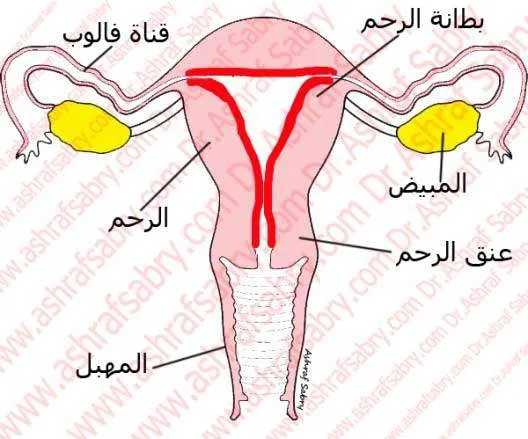
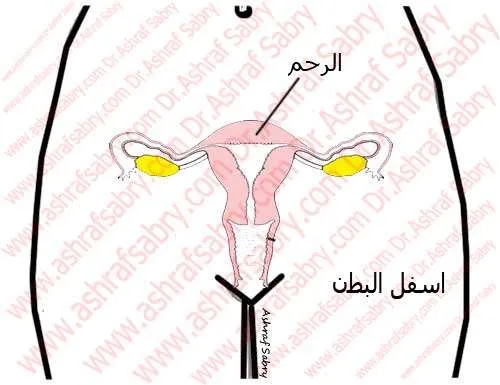
    The female reproductive system is a group of organs responsible for conception and pregnancy. It lies in the lower abdomen and pelvis and has internal and external parts.

    Struggling to conceive? If natural conception is difficult in your case, IVF and ICSI with Dr. Ashraf Sabry may be the right solution. Learn about the steps, timing and who it suits.

    Internal reproductive organs

    The vagina

    The vagina is a muscular canal about 10 cm long, running from the vulva to the uterus. Its inner lining has folds. Cells, glands and beneficial bacteria produce acidic secretions that keep it moist and protect it from harmful microbes. The vagina stretches during intercourse, and at ejaculation sperm are deposited at its upper end.

    The uterus

    The uterus is a hollow, pear-shaped muscular organ in the lower abdomen, above the vagina. It provides the passage for sperm on their way to the egg, and later receives and nourishes the fertilized egg. It has two parts: the body of the uterus and, below it, the cervix. The body is about 7 cm long, 5 cm wide and weighs about 50 g, varying between women and with previous pregnancies. In about 80% of women the uterus tilts forward towards the abdominal wall (anteverted), and in about 20% backwards towards the spine (retroverted), which is a normal variant. The uterus is lined by the endometrium, which thickens each month in response to female hormones so a fertilized egg can implant; if pregnancy does not occur, the extra lining is shed as the period.

    The cervix

    The cervix is the gateway at the lower end of the uterus through which sperm enter. Its lower part can be seen at the top of the vagina, while its upper part lies above it. It is about 3 cm long, with an external opening leading to the cervical canal and an internal opening into the body of the uterus. The canal has folds lined with mucus-producing cells. The mucus changes through the cycle: scanty and thick after a period, then abundant, clear and stretchy in the days before ovulation to help healthy sperm through, then scanty and thick again after ovulation to block sperm. Inside the canal, the mucus protects sperm from vaginal acidity and nourishes them.

    The fallopian tubes

    The two fallopian tubes are narrow tubes about 10 cm long, one on each side of the uterus, ending in finger-like fringes (fimbriae). The part nearest the ovary, the ampulla, is wider than the part nearest the uterus. When an ovary releases an egg, the fimbriae pick it up and draw it into the tube. The ampulla is where sperm meet and fertilize the egg; the fertilized egg is then carried towards the uterus by rhythmic muscle contractions and by tiny hair-like cilia lining the tube, whose cells also secrete fluids that nourish it.

    The ovaries

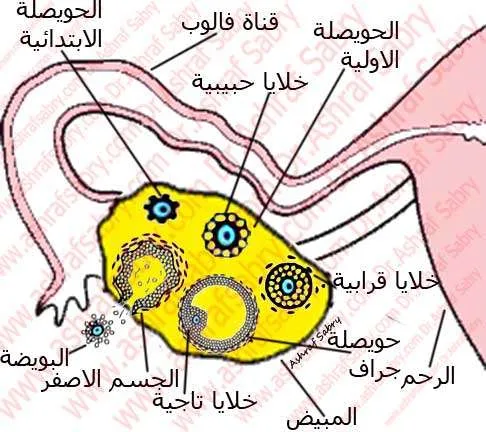
    The two ovaries are small organs on either side of the pelvis, near the ends of the fallopian tubes. They are the source of eggs and of female hormones, making them central to fertility. Each is about 3 cm long and 1.5 cm wide, with an outer cortex containing follicles at different stages and an inner medulla containing blood vessels and nerves. A baby girl is born with about one to two million follicles; around 300,000–400,000 remain at puberty, and the number keeps falling, especially after 35.

    Primordial follicles

    A primordial follicle consists of an egg surrounded by a layer of granulosa cells; those closest to the egg are called corona cells. Each month, hormones recruit a group of follicles, of which usually one reaches maturity and is ready for fertilization.

    External genitalia (the vulva)

    The mons pubis

    A pad of fatty tissue over the pubic bone, covered with hair after puberty.

    The labia majora

    Two thick outer folds of skin on either side of the vaginal opening, covered with hair after puberty and containing the openings of some glands.

    The labia minora

    Thinner inner folds of skin that run alongside the vaginal opening, inside the labia majora.

    The clitoris

    A small structure at the top of the labia minora, equivalent to the penis in men. It is made of erectile tissue that fills with blood during arousal and has a very rich nerve supply, playing a key role in sexual arousal. It is covered by a fold of skin called the clitoral hood.

    The hymen

    A thin rim of tissue around the vaginal opening, with an opening that allows menstrual blood to pass. Its shape varies widely between women. It may stretch or tear at first intercourse, but not always, and its appearance is not a reliable indicator of previous intercourse.

    Bartholin’s glands

    Two glands on either side of the vaginal opening that secrete mucus for lubrication during intercourse.

    The urethral opening

    The opening of the urethra lies just below the clitoris, above the vaginal opening.

    Position of the uterus in the lower abdomen
    The uterus in the lower abdomen
    Female internal reproductive organs
    Female internal reproductive organs
    Female external genitalia
    Female external genitalia
    The ovary and follicles at different stages
    The ovary and follicles at different stages

    International Guidelines

    In line with global standards, Dr. Sabry follows the latest recommendations from the American Society for Reproductive Medicine (ASRM), European Society of Human Reproduction and Embryology (ESHRE), and Royal College of Obstetricians and Gynaecologists (RCOG). Thus, patients receive care that is safe, ethical, and evidence-based.

    Our Patient Reviews

    Discover what patients say about us on Google Maps, Vezeeta, and WhatClinic.

    Why Choose Dr. Ashraf Sabry?

    Dr. Ashraf Sabry, consultant in obstetrics, gynecology, fertility, and aesthetic gynecology, is recognized among the best OBGYN and fertility specialists in Cairo. With over 20 years of experience, he combines science and compassion to provide world-class care. Book your appointment through the contact page, WhatsApp, or call +201022224442.

  • The Male Reproductive System

    The Male Reproductive System

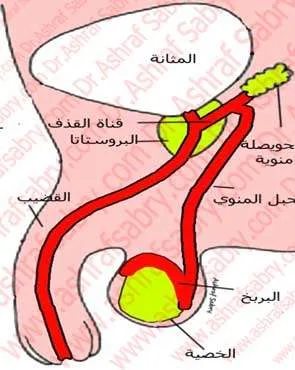
    The male reproductive system is a group of organs responsible for producing sperm and delivering them for conception. It has internal and external parts.

    Struggling to conceive? If natural conception is difficult in your case, IVF and ICSI with Dr. Ashraf Sabry may be the right solution. Learn about the steps, timing and who it suits.

    The testes

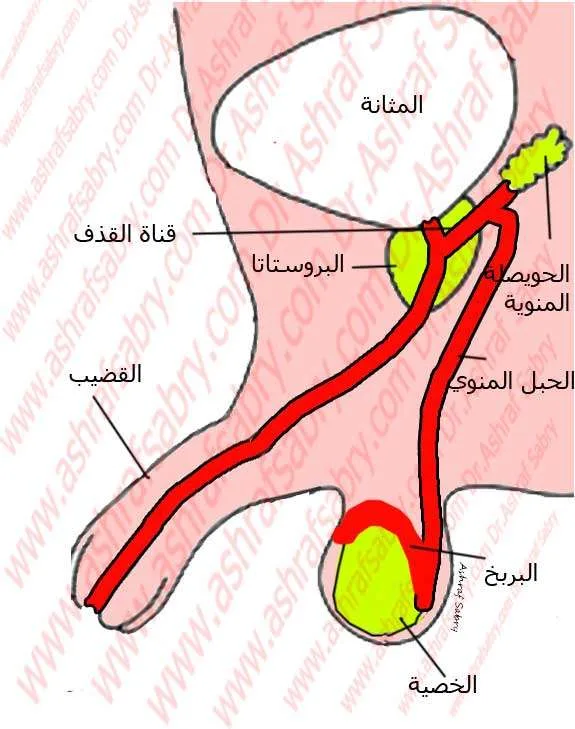
    The testes produce sperm and secrete testosterone. They sit in the scrotum below the penis, outside the body, because they need a slightly lower temperature than the rest of the body to produce sperm efficiently. Each testis is divided into lobules containing tightly coiled tubes called seminiferous tubules. Between the tubules lie the Leydig cells, which produce testosterone. The tubules are lined by Sertoli cells, between which immature sperm cells develop into mature sperm. It is normal for one testis to be slightly larger or to hang lower than the other.

    The rete testis

    The seminiferous tubules from each lobule join to form a network called the rete testis. From it, fine channels called efferent ductules carry sperm to the epididymis at the back of the testis.

    The epididymis

    The epididymis is a small structure about 5 cm long at the back of each testis, made of a single very fine tube 4–5 metres long, tightly coiled. Sperm mature as they pass through it; by the time they reach its end, they are able to swim and fertilize an egg.

    The vas deferens

    The epididymis continues as a thicker tube, the vas deferens, about 30 cm long and surrounded by muscle. These muscles contract during ejaculation to propel the sperm forward.

    The ejaculatory ducts

    Each vas deferens joins the duct of a seminal vesicle to form an ejaculatory duct, about 2 cm long, which passes through the prostate and opens into the urethra.

    The seminal vesicles

    The seminal vesicles produce the largest share of the seminal fluid, including fructose that fuels sperm.

    The prostate gland

    The prostate produces another part of the seminal fluid, which helps the semen liquefy after ejaculation.

    The penis

    The penis contains two cylinders of spongy erectile tissue (the corpora cavernosa) running along its length, and a third cylinder (the corpus spongiosum) through which the urethra runs. The erectile tissue fills with blood during arousal, causing an erection, and empties into the veins afterwards. The corpus spongiosum ends at the head of the penis (the glans), the most sensitive part because of its many nerve endings. The average adult penis is around 9 cm flaccid and 13 cm erect.

    The urethra

    The urethra runs through the corpus spongiosum and opens at the tip of the glans. It carries both urine and semen.

    Sperm

    Each sperm has a head, which carries the genetic material and is covered by a cap (acrosome) that helps it penetrate the egg; a midpiece, which provides energy; and a tail, which drives movement.

    Semen

    Semen is a mixture of secretions from the prostate and seminal vesicles with sperm from the testes. The World Health Organization’s latest manual (2021) gives the following lower reference limits for a fertile man:

    • Volume: 1.4 mL or more
    • Sperm concentration: 16 million per mL or more (total 39 million per ejaculate)
    • Total motility: 42% or more; progressive motility: 30% or more
    • Normal forms (strict criteria): 4% or more
    • Vitality: 54% or more live sperm

    Results below these limits do not mean a man is infertile, and results above them do not guarantee fertility. A single abnormal result should be repeated, and the analysis must be done in an experienced laboratory.

    Male reproductive system
    The male reproductive system
    Anatomy of the penis
    The penis
    Anatomy of the testis
    The testis
    Human sperm
    Sperm

    International Guidelines

    In line with global standards, Dr. Sabry follows the latest recommendations from the American Society for Reproductive Medicine (ASRM), European Society of Human Reproduction and Embryology (ESHRE), and Royal College of Obstetricians and Gynaecologists (RCOG). Thus, patients receive care that is safe, ethical, and evidence-based.

    Our Patient Reviews

    Discover what patients say about us on Google Maps, Vezeeta, and WhatClinic.

    Why Choose Dr. Ashraf Sabry?

    Dr. Ashraf Sabry, consultant in obstetrics, gynecology, fertility, and aesthetic gynecology, is recognized among the best OBGYN and fertility specialists in Cairo. With over 20 years of experience, he combines science and compassion to provide world-class care. Book your appointment through the contact page, WhatsApp, or call +201022224442.

  • The Menstrual Cycle

    The Menstrual Cycle

    The menstrual cycle is a multi-step process that links several organs in the body.

    FSH, released from the pituitary gland, stimulates a group of follicles in the ovary to grow. With the help of LH, also from the pituitary, the theca cells around each follicle convert cholesterol into androstenedione, which passes into the granulosa cells inside the follicle. Helped by FSH, the granulosa cells use the enzyme aromatase to convert it into estrogen.

    The uterus is lined by a layer called the endometrium. At the start of a period (day 1 of the cycle), the lining is shed with some blood, which lasts 2–7 days. A thin base layer remains, which then multiplies and thickens under the influence of estrogen. Estrogen also changes the cervical mucus so that it allows sperm to pass into the uterus. For the uterus, this part of the cycle is called the proliferative phase.

    At ovulation the mature egg leaves its follicle, and the remaining follicle becomes the corpus luteum, which produces progesterone. Progesterone completes the build-up of the lining and changes its structure so it is ready to receive and implant a fertilized egg. It also makes the cervical mucus thick, blocking sperm. If pregnancy does not occur, estrogen and progesterone levels fall and the lining breaks down and is shed as the next period. For the uterus, this second part of the cycle is called the secretory phase.

    A normal cycle lasts 21–35 days in adults, counted from the first day of one period to the first day of the next, with bleeding usually lasting 3–7 days and a moderate flow. Cycles that are consistently shorter or longer than this, very irregular, or very heavy should be checked, as they can be a sign of ovulation problems.

    Endometrium early in the cycle
    The uterine lining early in the cycle
    Endometrium in mid-cycle
    The uterine lining in mid-cycle
    Endometrium at the end of the cycle and menstruation
    The lining at the end of the cycle and menstruation
    Ultrasound of the endometrium in the first half of the cycle
    Ultrasound of the lining in the first half of the cycle
    Ultrasound of the endometrium in the second half of the cycle
    Ultrasound of the lining in the second half of the cycle

    International Guidelines

    In line with global standards, Dr. Sabry follows the latest recommendations from the American Society for Reproductive Medicine (ASRM), European Society of Human Reproduction and Embryology (ESHRE), and Royal College of Obstetricians and Gynaecologists (RCOG). Thus, patients receive care that is safe, ethical, and evidence-based.

    Our Patient Reviews

    Discover what patients say about us on Google Maps, Vezeeta, and WhatClinic.

    Why Choose Dr. Ashraf Sabry?

    Dr. Ashraf Sabry, consultant in obstetrics, gynecology, fertility, and aesthetic gynecology, is recognized among the best OBGYN and fertility specialists in Cairo. With over 20 years of experience, he combines science and compassion to provide world-class care. Book your appointment through the contact page, WhatsApp, or call +201022224442.

  • What Happens During Ovulation?

    What Happens During Ovulation?

    Producing an egg ready for fertilization each month is a multi-step process that links several organs in the body.

    The hypothalamus at the base of the brain releases GnRH, which stimulates the pituitary gland to release follicle-stimulating hormone (FSH) and luteinizing hormone (LH).

    FSH stimulates a group of primordial follicles in the ovary to grow. Growth begins as extra layers of granulosa cells form around the egg; nearby ovarian tissue then develops into theca cells, which separate into an inner layer (theca interna) and an outer layer (theca externa). At this stage the follicle is called a primary follicle.

    Under the influence of LH, the theca cells convert cholesterol into androstenedione, which passes into the granulosa cells. Helped by FSH, the granulosa cells use the enzyme aromatase to convert androstenedione into estrogen. Fluid secreted by the follicle cells collects in a central cavity, and the follicle is now called an antral follicle.

    Rising estrogen from the growing follicles reduces FSH release. As a result, the other follicles stop growing and fade away, except one: the dominant follicle, which has the most FSH receptors and can respond to even small amounts of FSH. The very high estrogen level around mid-cycle triggers a sudden surge of LH, which completes the maturation of the egg. About 36 hours after the surge begins, the egg is released from the follicle: this is ovulation. Just before ovulation, the mature follicle is called a Graafian follicle.

    The mature egg leaves the ovary surrounded by a few supporting (corona) cells and is picked up by the finger-like fringes of the fallopian tube. The remainder of the follicle becomes the corpus luteum, which produces progesterone. Progesterone completes the build-up of the uterine lining and changes its structure to prepare it to receive and implant a fertilized egg. If pregnancy does not occur, estrogen and progesterone levels fall, the lining breaks down and is shed as a menstrual period.

    The part of the ovarian cycle before ovulation is called the follicular phase, and the part after ovulation is the luteal phase.

    The ovary and follicles at different stages
    The ovary and follicles at different stages
    Hormone levels across the menstrual cycle
    Hormone levels in the blood across the month

    International Guidelines

    In line with global standards, Dr. Sabry follows the latest recommendations from the American Society for Reproductive Medicine (ASRM), European Society of Human Reproduction and Embryology (ESHRE), and Royal College of Obstetricians and Gynaecologists (RCOG). Thus, patients receive care that is safe, ethical, and evidence-based.

    Our Patient Reviews

    Discover what patients say about us on Google Maps, Vezeeta, and WhatClinic.

    Why Choose Dr. Ashraf Sabry?

    Dr. Ashraf Sabry, consultant in obstetrics, gynecology, fertility, and aesthetic gynecology, is recognized among the best OBGYN and fertility specialists in Cairo. With over 20 years of experience, he combines science and compassion to provide world-class care. Book your appointment through the contact page, WhatsApp, or call +201022224442.
  • What Is Infertility?

    What Is Infertility?

    Infertility (delayed conception) is defined as not achieving pregnancy after 12 months of regular, unprotected intercourse. If the woman is 35 or older, evaluation is recommended after 6 months, and immediately if she is over 40 or there is a known cause such as irregular periods, previous pelvic surgery or a known sperm problem.

    Infertility is called primary when a couple has never conceived, and secondary when there has been at least one previous pregnancy, even if it ended in miscarriage.

    About 60% of couples conceive within the first 6 months of trying, around 80–85% within one year, and about 90% within two years. These rates fall as the woman’s age increases, which is why age is the single most important factor when deciding how long to wait before seeking help.

    Infertility affects about one in six people worldwide, according to the World Health Organization. In roughly a third of couples the cause is in the woman, in a third it is in the man, and in the remainder both partners contribute or no cause is found, so both partners should always be assessed together.


    International Guidelines

    In line with global standards, Dr. Sabry follows the latest recommendations from the American Society for Reproductive Medicine (ASRM), European Society of Human Reproduction and Embryology (ESHRE), and Royal College of Obstetricians and Gynaecologists (RCOG). Thus, patients receive care that is safe, ethical, and evidence-based.

    Our Patient Reviews

    Discover what patients say about us on Google Maps, Vezeeta, and WhatClinic.

    Why Choose Dr. Ashraf Sabry?

    Dr. Ashraf Sabry, consultant in obstetrics, gynecology, fertility, and aesthetic gynecology, is recognized among the best OBGYN and fertility specialists in Cairo. With over 20 years of experience, he combines science and compassion to provide world-class care. Book your appointment through the contact page, WhatsApp, or call +201022224442.

  • Ejaculation in Men

    Ejaculation in Men

    Ejaculation happens after sexual arousal and orgasm. Smooth muscles in the vas deferens contract and push sperm into the ejaculatory ducts, where they mix with fluid from the seminal vesicles and the prostate. Semen is therefore made up of secretions from the prostate and seminal vesicles, carrying sperm produced in the testes.

    At the same moment, the sphincter muscle at the neck of the bladder tightens to stop semen from flowing backwards into the bladder, while the muscles around the urethra contract rhythmically to propel semen out of the penis. Together, these steps make up ejaculation.

    Male reproductive anatomy

    Ejaculation problems and fertility

    If the bladder-neck muscle does not close properly, semen can flow into the bladder instead of out of the penis. This is called retrograde ejaculation and is seen with diabetes, after some prostate or bladder surgery, and with certain medications. It is diagnosed by finding sperm in a urine sample taken right after orgasm. Many men with retrograde ejaculation can still father children, either with medication or by recovering sperm from the urine for IUI or ICSI. Absent ejaculation (anejaculation) and premature ejaculation can also be evaluated and treated.


    International Guidelines

    In line with global standards, Dr. Sabry follows the latest recommendations from the American Society for Reproductive Medicine (ASRM), European Society of Human Reproduction and Embryology (ESHRE), and Royal College of Obstetricians and Gynaecologists (RCOG). Thus, patients receive care that is safe, ethical, and evidence-based.

    Our Patient Reviews

    Discover what patients say about us on Google Maps, Vezeeta, and WhatClinic.

    Why Choose Dr. Ashraf Sabry?

    Dr. Ashraf Sabry, consultant in obstetrics, gynecology, fertility, and aesthetic gynecology, is recognized among the best OBGYN and fertility specialists in Cairo. With over 20 years of experience, he combines science and compassion to provide world-class care. Book your appointment through the contact page, WhatsApp, or call +201022224442.

  • Male Hormones and Sperm Production

    Male Hormones and Sperm Production

    Sperm production (spermatogenesis) is a multi-step process controlled by a hormonal chain that starts in the brain.

    The hypothalamus, at the base of the brain, releases gonadotropin-releasing hormone (GnRH). GnRH stimulates the pituitary gland to release two hormones: follicle-stimulating hormone (FSH) and luteinizing hormone (LH).

    LH acts on the Leydig cells of the testis to produce testosterone. Testosterone, working together with FSH (which acts on the Sertoli cells), drives the seminiferous tubules to produce sperm and bring them to maturity.

    A complete cycle of sperm production takes about 64–74 days in the testis, followed by roughly 1–2 weeks of maturation in the epididymis. In practice, this means any change in health or lifestyle takes around three months to show up in a semen analysis.

    Testosterone is also responsible for male characteristics such as facial hair, a deeper voice, muscle and body build, and sex drive.

    Human sperm

    What can disrupt this hormonal chain?

    Because sperm production depends on signals from the brain, anything that suppresses GnRH, FSH or LH can lower sperm counts. A common modern cause is taking testosterone or anabolic steroids: external testosterone switches off the pituitary’s FSH and LH, and can stop sperm production entirely. Men trying to conceive should not use testosterone therapy without specialist advice. Other causes include pituitary disorders, high prolactin, severe stress, obesity and some medications.


    International Guidelines

    In line with global standards, Dr. Sabry follows the latest recommendations from the American Society for Reproductive Medicine (ASRM), European Society of Human Reproduction and Embryology (ESHRE), and Royal College of Obstetricians and Gynaecologists (RCOG). Thus, patients receive care that is safe, ethical, and evidence-based.

    Our Patient Reviews

    Discover what patients say about us on Google Maps, Vezeeta, and WhatClinic.

    Why Choose Dr. Ashraf Sabry?

    Dr. Ashraf Sabry, consultant in obstetrics, gynecology, fertility, and aesthetic gynecology, is recognized among the best OBGYN and fertility specialists in Cairo. With over 20 years of experience, he combines science and compassion to provide world-class care. Book your appointment through the contact page, WhatsApp, or call +201022224442.