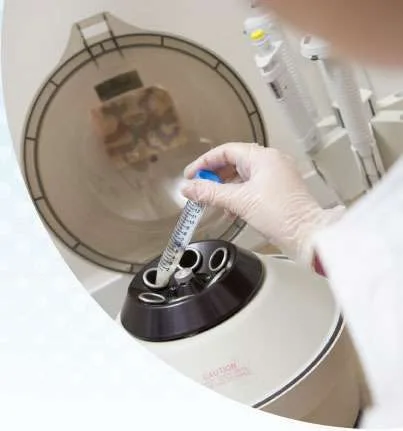
Embryos are mixed with a protective solution (cryoprotectant) that shields them from damage during freezing, loaded into special straws, and stored in tanks of liquid nitrogen at −196 °C. At this temperature they can be stored safely for many years. Thawing involves warming the embryos and removing the protective solution before transfer.
Vitrification: ultra-rapid freezing
Older slow-freezing methods cooled embryos at about 0.3 °C per minute, and ice crystals could damage the cells. Today, vitrification is the standard method. Water inside the cells is replaced with cryoprotectant and the embryo is cooled extremely fast (thousands of degrees per minute), so the fluid turns into a glass-like solid without forming ice. With vitrification, more than 95% of good-quality blastocysts survive thawing, and pregnancy rates with frozen embryos are now similar to fresh transfers.
When are embryos frozen?
- Extra good-quality embryos after a fresh transfer, for a future pregnancy without another stimulation.
- “Freeze-all” cycles when there is a risk of ovarian hyperstimulation syndrome (OHSS), a thin or unsuitable lining, or while waiting for genetic test results (PGT).
- Before cancer treatment (chemotherapy or radiotherapy).
Egg freezing
Since vitrification, egg freezing has become a reliable option. Survival rates are high, and success depends mainly on the woman’s age at freezing and the number of eggs stored. It is used for fertility preservation before cancer treatment or by women who wish to delay pregnancy, ideally before 35.
Freezing sperm and testicular tissue
Sperm freezing benefits men before chemotherapy or radiotherapy, men with conditions that are lowering their sperm count, and men who will be away during treatment. Sperm retrieved surgically from the testis in men with azoospermia can also be frozen for later ICSI, avoiding repeated procedures.

International Guidelines
In line with global standards, Dr. Sabry follows the latest recommendations from the American Society for Reproductive Medicine (ASRM), European Society of Human Reproduction and Embryology (ESHRE), and Royal College of Obstetricians and Gynaecologists (RCOG). Thus, patients receive care that is safe, ethical, and evidence-based.
Our Patient Reviews
Discover what patients say about us on Google Maps, Vezeeta, and WhatClinic.
Why Choose Dr. Ashraf Sabry?
Dr. Ashraf Sabry, consultant in obstetrics, gynecology, fertility, and aesthetic gynecology, is recognized among the best OBGYN and fertility specialists in Cairo. With over 20 years of experience, he combines science and compassion to provide world-class care. Book your appointment through the contact page, WhatsApp, or call +201022224442.