
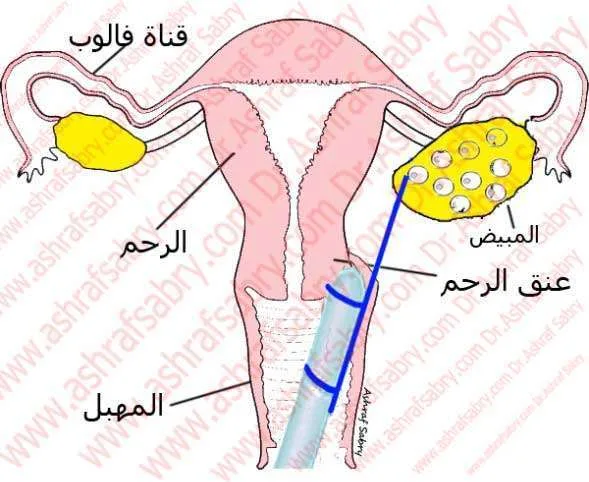
In vitro fertilization (IVF) means fertilizing the egg with sperm outside the body, in the laboratory. The first IVF baby, Louise Brown, was born in the United Kingdom in 1978. Today, more than 12 million children worldwide have been born through IVF.
Who needs IVF?
- Blocked or damaged fallopian tubes.
- Severe pelvic adhesions.
- Significant male factor, such as a very low sperm count or motility, or sperm retrieved from the testis.
- Endometriosis, especially moderate or severe.
- Polycystic ovary syndrome that has not responded to simpler treatment.
- Long-standing unexplained infertility, or failure of other treatments such as IUI.
- Women over 35, where there is less time for repeated trials.
- Couples needing genetic testing of embryos (PGT), including for gender selection, or fertility preservation.

Step 1: Preparation
The couple first receives a full explanation of the treatment, its success rates and its risks. Both partners are assessed to identify anything that could reduce the chance of pregnancy: screening for vaginal, cervical or semen infections, infection screening blood tests, ovarian reserve tests (AMH and antral follicle count) for the woman, and a semen analysis for the man. A pelvic ultrasound checks the ovaries, the shape and cavity of the uterus, and the tubes.
Problems are treated before starting: for example, polyps or fibroids distorting the uterine cavity are removed, and a hydrosalpinx (a swollen, fluid-filled tube) is removed or blocked, because its fluid flowing back into the uterus roughly halves the chance of success.
Step 2: Ovarian stimulation
IVF aims to collect several mature eggs, which increases the number of embryos and the chance of pregnancy. The main medications are:
Gonadotropin injections (FSH and LH)
Available as human menopausal gonadotropin (hMG), purified urinary FSH and recombinant FSH. The dose is tailored to each woman’s age, AMH, antral follicle count and previous response.
GnRH agonists
These first stimulate and then switch off the pituitary’s release of FSH and LH, preventing premature ovulation. They are also used to shrink fibroids and endometriosis.
GnRH antagonists
These block the pituitary immediately and are used for a few days during stimulation to prevent premature ovulation.
The trigger injection
hCG, which acts like LH, or a GnRH agonist trigger in women at risk of OHSS, completes egg maturation once the follicles are ready.
Stimulation protocols
Antagonist protocol
Injections start on day 2–3 of the period, and the antagonist is added after about five days or when the lead follicles reach about 13–14 mm. It is now the most widely used protocol: shorter, with fewer injections, and with a much lower risk of OHSS.
Long agonist protocol
The agonist is started about a week before the expected period (around day 21). After 10–14 days, a blood test and ultrasound confirm that the pituitary is suppressed (low estrogen and thin lining), and stimulation injections are then started while the agonist continues. It is still used in selected cases, such as endometriosis.
Short agonist protocol
The agonist and stimulation injections both start at the beginning of the cycle. It is now used less often.
Mild and natural-cycle IVF
Lower doses, or no stimulation, may suit some women, such as those with a low reserve.
Monitoring
During stimulation, transvaginal ultrasound measures the growing follicles, which grow about 1.5–2 mm a day, and the lining, often with estrogen blood tests. When enough follicles reach about 17–20 mm, the trigger injection is given, and egg collection is scheduled about 36 hours later.


Step 3: Sperm collection
On the day of egg collection, the husband provides a semen sample, usually by masturbation; a second sample may be requested if the count is very low. If there are no sperm in the semen, sperm can be retrieved from the testis on the same day, or a previously frozen sample used.
Step 4: Egg collection
In the past, eggs were collected by laparoscopy under general anaesthesia. Today, they are collected through the vagina using an ultrasound probe fitted with a fine needle connected to gentle suction. Each follicle is seen on the screen, punctured and its fluid aspirated. The procedure takes about 15–30 minutes under light sedation or anaesthesia, and eggs are recovered from about 80% of follicles. Most women go home after a few hours and start progesterone to prepare the uterine lining.

Step 5: In the laboratory
The follicular fluid is examined under the microscope to find the eggs, which are placed in culture medium containing everything they need. Eggs for ICSI have their surrounding cells removed and are graded by maturity. They are kept in an incubator at body temperature with a carefully controlled mixture of oxygen, carbon dioxide and nitrogen. Meanwhile, the sperm are washed and prepared to select the most motile, healthy sperm.
Step 6: Fertilization
Conventional IVF
Prepared sperm are placed with the eggs in a dish and left in the incubator, so that a sperm penetrates each egg naturally.
ICSI (intracytoplasmic sperm injection)
Under a special microscope magnifying about 400 times, the embryologist uses micromanipulators to handle the egg and sperm. A single sperm is immobilized and drawn into a fine glass needle; the egg is held steady with a holding pipette; and the needle passes through the egg’s shell and membrane to inject the sperm directly into its cytoplasm. ICSI is essential for male factor infertility or previous fertilization failure, and is used for PGT cycles.


Step 7: Embryo development
About 16–18 hours after insemination, the eggs are checked for fertilization: a normally fertilized egg shows two pronuclei, one from the egg and one from the sperm. Embryos are then cultured and graded by the number and evenness of their cells and the amount of fragmentation. Most clinics now culture embryos to day 5 (the blastocyst stage), which allows the strongest embryo to be selected. Time-lapse incubators allow embryos to be monitored without disturbing them.
Step 8: Embryo transfer
On day 3 or, more often, day 5, the selected embryo is transferred into the uterus through a fine, soft catheter designed not to harm the embryo or the lining. Under ultrasound guidance, the cervix is gently cleaned and the catheter passed slowly into the uterus to place the embryo at the ideal depth. The procedure takes a few minutes and usually needs no anaesthesia. Bed rest afterwards is not needed.
The number of embryos transferred depends on the woman’s age, embryo quality and previous attempts. To avoid the risks of twins and higher-order multiples, current guidelines recommend transferring a single blastocyst in most women, especially those under 35, and no more than two in most cases. Remaining good-quality embryos are frozen for future use.

After the transfer
Progesterone support continues to prepare the lining and support early pregnancy. Normal light activity is fine. About 9–12 days after a blastocyst transfer, a blood test measures the pregnancy hormone (hCG). If positive, an ultrasound about two to three weeks later confirms that the pregnancy is inside the uterus and developing normally. Sometimes hCG rises only slightly and no pregnancy is seen on ultrasound (a biochemical pregnancy), which is a very early loss.
Risks of IVF
Multiple pregnancy
Transferring more than one embryo increases the chance of twins or triplets, which carry higher risks of miscarriage, preterm birth and complications for mother and babies. Single embryo transfer largely prevents this.
Ovarian hyperstimulation syndrome (OHSS)
OHSS is an exaggerated response to stimulation drugs, more common in women with PCOS or high AMH. Fluid leaks from blood vessels into the abdomen and sometimes the chest, causing bloating, pain, nausea and vomiting, reduced urine and, in severe cases, breathlessness. Mild cases settle at home with fluids and rest; moderate cases need close monitoring; severe cases need hospital admission for intravenous fluids, prevention of blood clots and, if needed, drainage of abdominal fluid. Modern practice (antagonist protocols, agonist triggers and freezing all embryos) has made severe OHSS rare.
Egg collection complications
Rarely, bleeding, injury to a blood vessel or bowel, or pelvic infection can occur.

Why IVF may not succeed
- The woman’s age is the strongest factor, because egg quality and the proportion of chromosomally normal embryos fall with age.
- Embryo chromosomal abnormalities are the main reason embryos fail to implant or miscarry.
- The uterine lining may be thin or affected by polyps, adhesions or chronic endometritis.
- The number of eggs and embryos available, which depends on ovarian reserve.
After an unsuccessful cycle, a review of the stimulation, the laboratory results and the uterus guides changes for the next attempt. Learn more on our IVF and ICSI page.
International Guidelines
In line with global standards, Dr. Sabry follows the latest recommendations from the American Society for Reproductive Medicine (ASRM), European Society of Human Reproduction and Embryology (ESHRE), and Royal College of Obstetricians and Gynaecologists (RCOG). Thus, patients receive care that is safe, ethical, and evidence-based.
Our Patient Reviews
Discover what patients say about us on Google Maps, Vezeeta, and WhatClinic.
Why Choose Dr. Ashraf Sabry?
Dr. Ashraf Sabry, consultant in obstetrics, gynecology, fertility, and aesthetic gynecology, is recognized among the best OBGYN and fertility specialists in Cairo. With over 20 years of experience, he combines science and compassion to provide world-class care. Book your appointment through the contact page, WhatsApp, or call +201022224442.